Sleep Affirmations: 40 to Use at Night and How to Listen
40 sleep affirmations to calm your mind, let go of the day and manifest as you drift off, plus an honest look at listening to affirmations while sleeping.
October 6, 2026, 9 min read
In this article
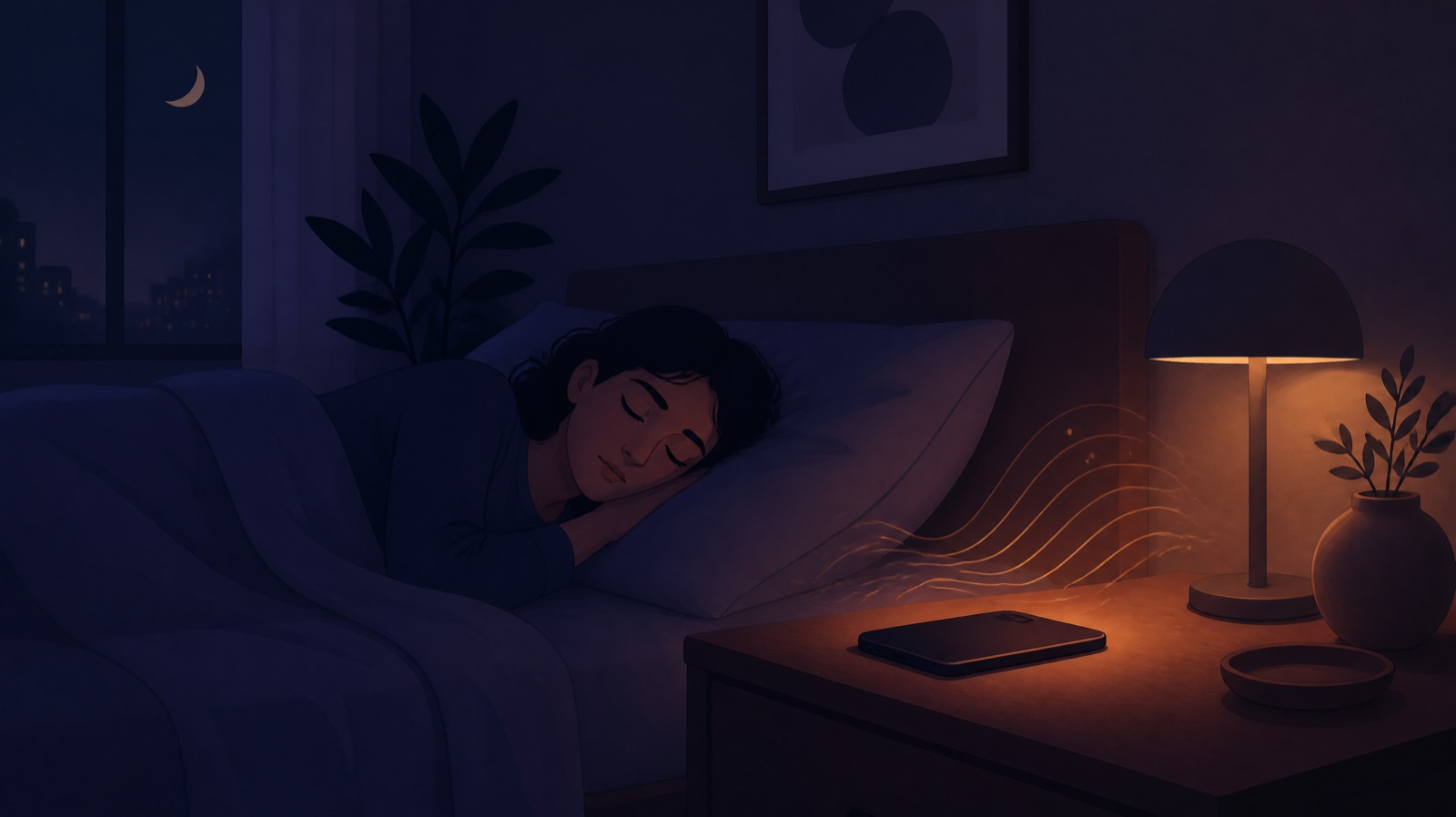
Sleep affirmations are calm, short statements you repeat or listen to as you wind down for the night, such as "I've done enough for today" or "My body knows how to rest." They help in two ways. They give a busy mind something gentle to hold onto instead of replaying the day, and they let you end the day rehearsing the person you're becoming, at a time when your mind is quiet and less inclined to argue back.
Below are 40 sleep affirmations sorted by what you need at night, a simple bedtime routine, and an honest answer to whether listening to affirmations while you sleep does anything.
Why bedtime is a good time for affirmations
Most people's minds don't switch off when the light does. It's when the unanswered email, the awkward thing you said, and tomorrow's to-do list all show up at once. Affirmations give that mental noise somewhere softer to go.
There's also a long tradition in manifestation of using the drowsy state just before sleep. Neville Goddard, whose ideas underpin the law of assumption, called it the "state akin to sleep" and recommended using it to imagine your desire as already fulfilled. Whatever you think of the metaphysics, it's a sensible time for it: you're relaxed, undistracted, and it's the last thing you think about before the day ends.
40 sleep affirmations
To quiet a busy mind
- I've done enough for today.
- Whatever's left can wait until morning.
- I'm allowed to put my thoughts down now.
- My mind can slow down. Nothing needs solving tonight.
- I let go of today, gently.
- I don't need to replay anything right now.
- Each breath makes me a little calmer.
- Tomorrow is a fresh start, and I'll meet it rested.
- I'm safe, I'm warm, and I can rest.
- My thoughts can float past without me following them.
For anxious nights
- This feeling is uncomfortable, not dangerous.
- I've got through every hard night so far.
- I can handle tomorrow when it comes.
- My worries are smaller in the morning.
- I'm doing my best, and my best is enough.
- I release what I can't control tonight.
- My body is slowing down, and my mind is following.
- It's okay if sleep takes a while. Resting still counts.
- I am not my anxious thoughts.
- Right now, in this bed, I'm okay.
For your body
- My body knows how to rest.
- My shoulders soften. My jaw unclenches.
- I'm grateful to my body for carrying me today.
- Every muscle is allowed to let go.
- Rest is how my body repairs itself.
- I sink a little deeper into the bed with each breath.
- I give my body the rest it deserves.
- Sleep comes easily when I stop chasing it.
For manifesting while you rest
- I fall asleep as the person I'm becoming.
- Good things are already on their way to me.
- I'm grateful for the life I'm building.
- I'm becoming more confident every day.
- I'll wake up clear about my next step.
- I'm someone who follows through, and tomorrow I will.
- Everything I need for tomorrow is already in me.
- I'm proud of how far I've come.
- The life I want is getting closer.
- I trust myself with tomorrow.
- I'm ready to receive good things.
- I'm exactly where I need to be tonight.
How to use sleep affirmations: a 10-minute bedtime routine

- Put the phone on night mode or down (2 minutes before). If you're listening to affirmations, have them ready so you're not scrolling in bed.
- Brain dump (2 minutes). Write down anything still rattling around: tasks, worries, tomorrow's plan. Getting it on paper tells your brain it doesn't need to hold it.
- Three slow breaths. In through the nose for four, out through the mouth for six. Longer exhales help many people feel calmer.
- Choose three to five affirmations. One to quiet your mind, one for your body, one about who you're becoming.
- Say them slowly, or listen to them. Whisper them, say them in your head, or play them back. Let each one land before the next.
- Picture one ordinary scene. If you're manifesting something, spend a minute imagining an everyday moment from the life where it's real. Then let it go.
The same five affirmations every night for a couple of weeks tends to work better than a new set every time. Familiarity is relaxing.
Should you listen to affirmations or say them?
Both work, and they suit different people.
| Saying them | Listening to them | |
|---|---|---|
| Best for | People who like active practice | People who are too tired or wired to focus |
| Effort | You need to stay awake to do it | You can lie back and drift |
| Concentration | Forces you through every word | Easier to zone out, which at bedtime can be fine |
| Best voice | Yours | Ideally yours too |
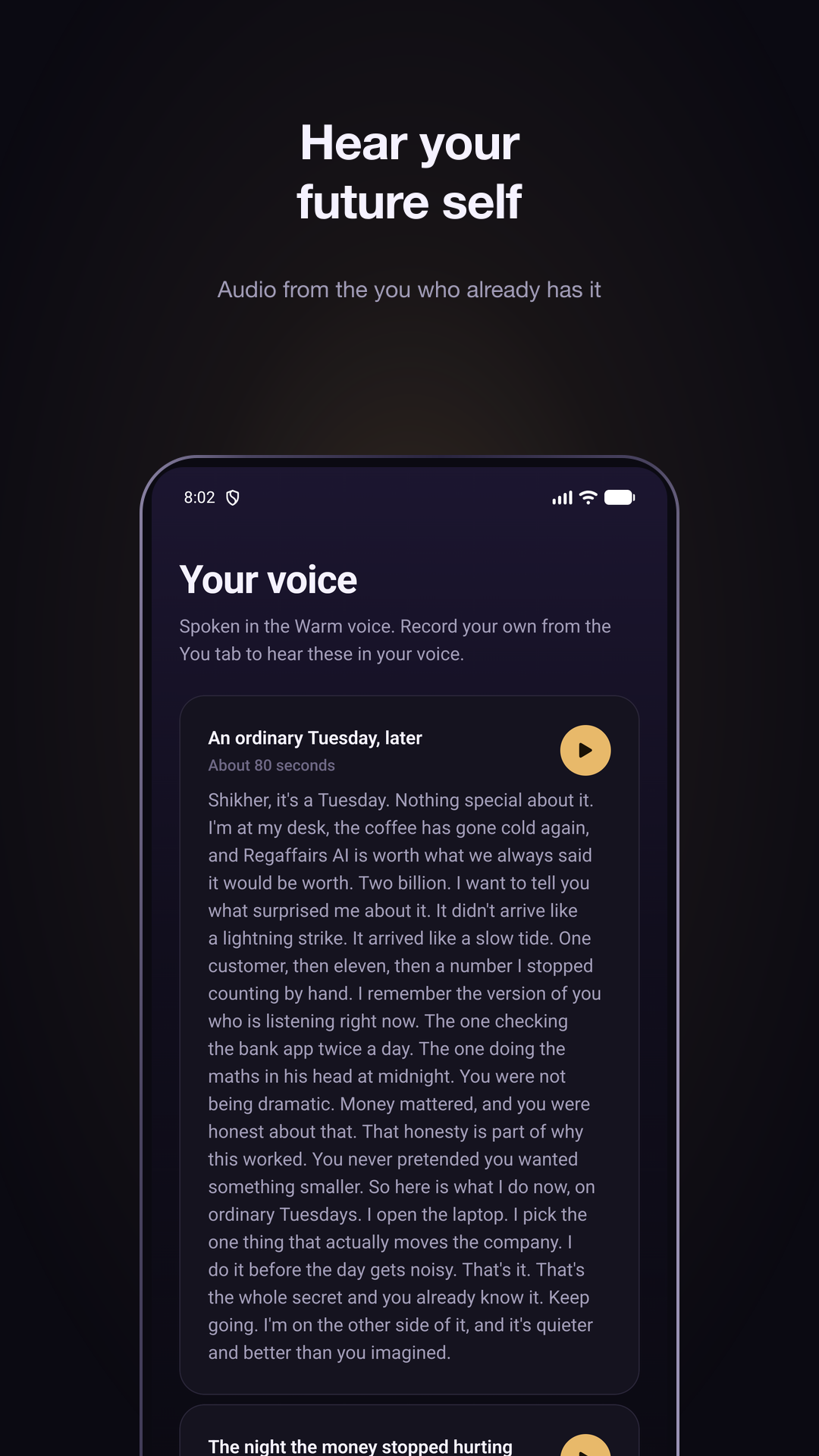
Listening is especially useful at night, when the last thing you want is another task. The best audio is calm, slow and in a voice you trust, and for many people the most convincing voice is their own. Hearing yourself say "I've done enough for today" lands differently from a stranger's voice with background music.
That's what Luma is built around. It writes your affirmations from your own words, then reads them back in a clone of your own voice, as your future self. You can press play when you get into bed and just listen.
Does listening to affirmations while sleeping work?
This is one of the most searched questions about sleep affirmations, so here's an honest answer.
Listening as you fall asleep: reasonable. You're still awake enough to hear and process them. It's a calming way to end the day, it replaces doom-scrolling or replaying worries, and it means the last thing on your mind is something kind.
Listening once you're deeply asleep: don't expect much. Sleep research suggests that learning complex new information during deep sleep is very limited, and there's no good evidence that affirmations played all night reprogramme your subconscious. Claims that "8 hours of sleep affirmations will change your life" aren't supported.
Possible downsides of all-night audio: sound can interrupt sleep for some people, and earbuds can be uncomfortable for side-sleepers. If you try it, use a sleep timer so the audio stops after 15 to 30 minutes, and keep the volume low.
The sensible approach: use affirmations as a wind-down ritual in the 10 to 20 minutes before sleep, while you can still take them in, and then let yourself sleep in quiet.
Bedtime affirmations for kids
Children often love a short, repeated bedtime phrase. Keep it simple and say it together:
- "I am safe and I am loved."
- "I did my best today."
- "Tomorrow will be a good day."
- "My body is sleepy and my mind is calm."
We have a longer list in affirmations for kids.
Sleep affirmations FAQ
How long should I listen to sleep affirmations?
Ten to twenty minutes as you wind down is plenty. Use a sleep timer so the audio stops once you're likely to be asleep.
Is it better to say sleep affirmations or listen to them?
Whichever helps you relax. Saying them keeps you more engaged; listening is easier when you're tired. Many people say a few, then listen to the rest.
Can I use sleep affirmations for anxiety?
Calming affirmations can help settle a racing mind at night. If anxiety regularly keeps you awake, though, talk to a GP, since there are effective treatments that work alongside a bedtime routine like this.
What are good affirmations to say before bed for manifesting?
Gentle, identity-based statements work best at night: "I fall asleep as the person I'm becoming," "I trust myself with tomorrow," "I'm grateful for the life I'm building." Keep them calm rather than energising.
Do I need headphones for sleep affirmations?
No. A phone on the bedside table at low volume works fine and is more comfortable for side-sleepers.
When to talk to someone
Sleep affirmations are a gentle way to relax. They're not a treatment for insomnia, sleep apnoea, or anxiety that keeps you up most nights. If poor sleep is affecting your days for more than a few weeks, talk to a GP. Approaches like cognitive behavioural therapy for insomnia (CBT-I) have good evidence behind them, and affirmations can sit happily alongside them.
Keep reading

Affirmations, 10 min read
Self Love Affirmations That Don't Feel Fake
60 self love affirmations sorted by how ready you are to believe them, plus how to write your own for self-esteem, confidence and hard days.

Affirmations, 10 min read
Money Affirmations: 50 to Use and How to Write Your Own
50 money affirmations for abundance, earning and calmer spending, plus how to manifest money in practice: wording that works and the actions to pair it with.
Affirmations, 13 min read
Affirmations for Kids: Simple Words That Help
Simple affirmations for kids by age and situation, plus how to write words children actually believe, remember, and want to say out loud at home or school.